Chimney Leak Repair in Renton, WA: Find the Source Before It Causes More Damage
A chimney leak rarely starts as a dramatic problem. More often, a homeowner notices a faint ceiling stain near the fireplace, dampness around the chimney breast, peeling paint, or a musty smell after a stretch of Pacific Northwest rain. By the time water is visible indoors, it may already have traveled through flashing, masonry, insulation, or framing.
If you need chimney leak repair in Renton, WA, the most important first step is finding where the water is entering — not simply sealing the spot where it appeared. Prime Chimney helps homeowners identify the source, repair the underlying damage, and protect the chimney from future weather exposure.
Why chimney leaks are common in Renton
Renton homes experience long wet seasons, wind-driven rain, temperature changes, and occasional freezing weather. Those conditions are hard on exposed masonry and roof connections. A chimney can look solid from the ground while small cracks, open mortar joints, rusted metal, or failed sealants allow water behind the exterior.
Homes in Downtown Renton, Renton Highlands, Benson Hill, Kennydale, and Talbot can have very different rooflines and chimney designs. Older brick chimneys may need masonry restoration, while newer homes may have problems at the flashing or chimney cap. In nearby Skyway, Tukwila, and Kent, similar moisture issues often appear where roof drainage and chimney construction meet.
Common causes of a leaking chimney
Damaged or improperly installed flashing
Flashing is the metal system that seals the joint between the chimney and the roof. Step flashing runs along the sides, while counterflashing is built into the chimney or masonry. If flashing is loose, corroded, poorly fitted, or covered with failing roof cement, rain can work underneath it.
Flashing problems are especially common when a roof has been replaced but the chimney connection was not rebuilt correctly. A surface patch may hide the issue temporarily, but a lasting repair usually requires careful chimney inspection and, in some cases, replacement or reinstallation of the flashing system.
Cracked chimney crown
The crown is the concrete or masonry cap at the top of the chimney, around the flue. It should shed water away from the chimney walls. Cracks, missing overhangs, and deteriorated edges allow water to soak into the masonry. Repeated wetting and drying can then cause spalling, open joints, and larger cracks.
A crown repair may involve filling and sealing minor cracks, rebuilding damaged sections, or replacing the crown when deterioration is extensive. The repair should also include a proper drip edge so water does not run directly down the chimney face.
Porous or damaged masonry
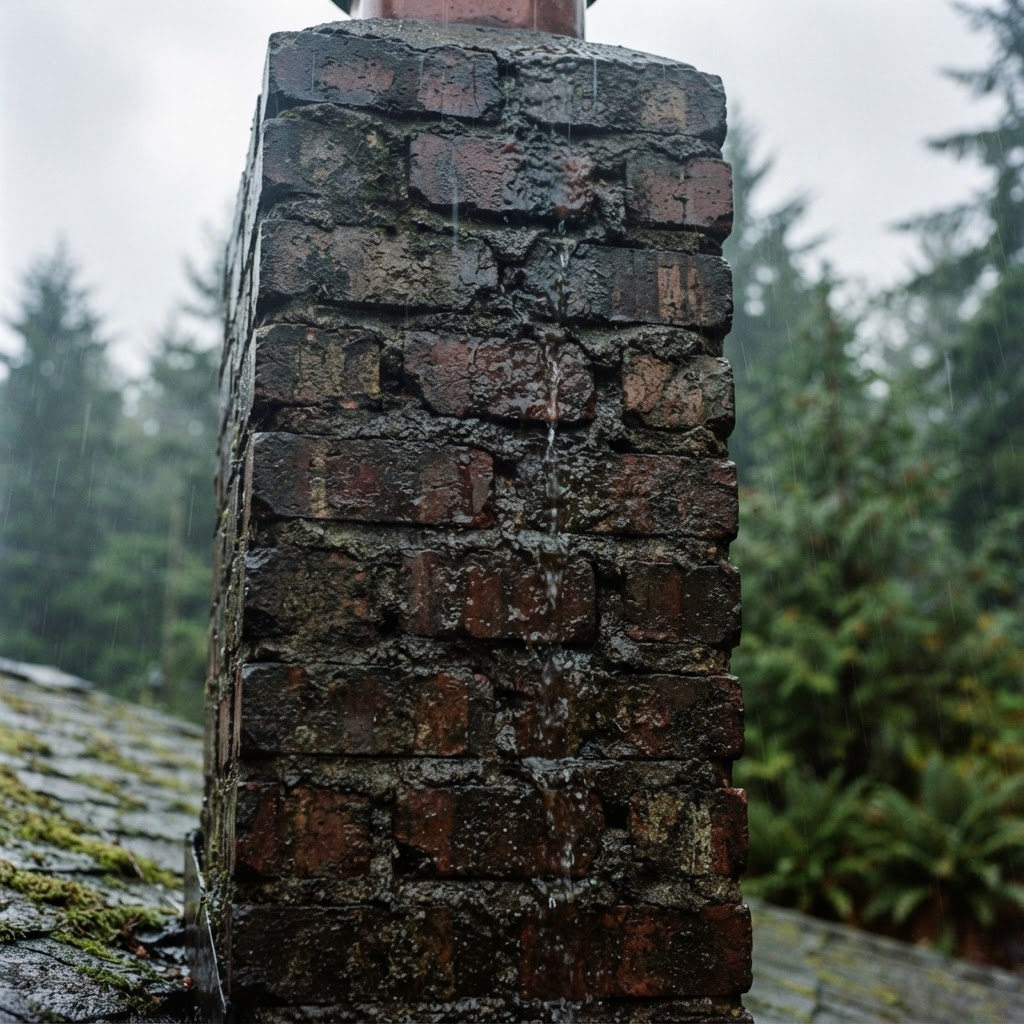
Brick and mortar are not automatically waterproof. Over time, masonry absorbs moisture, especially when mortar joints have eroded or bricks have begun to flake. Freeze-thaw cycles can accelerate the damage, even in a mild climate.
Tuckpointing or mortar joint repair can restore areas where the joints are failing. Individual damaged bricks may need replacement. A breathable chimney waterproofing treatment can sometimes be applied after repairs, but coating a chimney that is already wet or trapping moisture inside can make the problem worse.
Missing, damaged, or poorly fitted chimney cap
A chimney cap helps keep rain, leaves, and animals out of the flue. If it is missing, rusted, cracked, or too small for the chimney, water can enter directly from above. A cap also needs to be installed without blocking required ventilation or creating a path for water to run into the masonry.
Condensation and flue-related moisture
Not every chimney moisture problem is caused by roof rain. An improperly sized gas appliance, an unlined flue, or a damaged vent can create condensation inside the chimney. This is why a professional inspection matters: sealing exterior cracks without checking the venting system may leave the real source untreated. If your home has a gas appliance, gas fireplace repair service can evaluate the venting alongside the chimney.
Signs you may need chimney leak repair
Watch for these warning signs:
- Water stains on the ceiling or wall near the fireplace
- Damp or crumbling mortar around the chimney
- White mineral deposits, called efflorescence, on brick
- Rust around the damper, firebox, or fireplace doors
- Peeling paint or wallpaper near the chimney breast
- A musty odor after rain
- Loose flashing or roof cement visible around the chimney
- Cracked crown, missing cap, or exposed flue tiles
- Bricks that are flaking, cracked, or soft
A leak can be intermittent. Dry weather does not prove the issue is gone. Water may only enter during wind-driven rain or when a particular roof slope sends runoff toward the chimney.
What happens during a chimney leak inspection?
A thorough inspection should consider the entire water path. The technician examines the crown, cap, masonry, mortar joints, flashing, roof intersection, attic area, and accessible interior surfaces. If necessary, the inspection may include moisture tracing or controlled water testing to narrow down the entry point.
The goal is to separate the symptom from the source. For example, a ceiling stain on the south side of a fireplace may be caused by flashing on the opposite side of the chimney. Water can travel along roof decking or framing before it becomes visible.
The inspection should also look for safety concerns. If a chimney serves a wood-burning fireplace, gas appliance, or furnace, the flue and venting system need to be evaluated according to the appliance and the condition of the chimney.
Chimney leak repair options in Renton
The correct repair depends on what the inspection finds. Common solutions include:
Flashing repair or replacement
Damaged flashing may be repaired when the metal and surrounding materials are still sound. If the flashing is badly corroded or incorrectly installed, replacement provides a more reliable seal. The roof-to-chimney connection should be integrated with the roofing system rather than covered with a temporary bead of sealant.
Crown repair or rebuild
Small crown cracks can sometimes be repaired, while severely deteriorated crowns may need rebuilding. A properly shaped crown directs water away from the chimney and protects the top courses of masonry.
Masonry repair and tuckpointing
Open mortar joints, cracked bricks, and spalling sections should be repaired before water repellent is considered. Tuckpointing restores the joint surface and helps prevent additional water penetration.
Chimney cap installation
A correctly sized stainless steel or masonry cap can reduce rain entry and protect the flue opening. The design should account for the chimney dimensions, appliance requirements, and local weather exposure.
Breathable waterproofing
A professional masonry water repellent can reduce absorption while allowing trapped vapor to escape. It should be applied only to suitable, clean, dry masonry after structural and flashing repairs are complete.
Why quick DIY sealing often fails
Roof cement and caulk can be useful in limited applications, but they are not a substitute for diagnosing a chimney leak. Covering a crack can hide the visible symptom while water continues entering through a different location. Some coatings also trap moisture inside brick, accelerating deterioration.
Before climbing onto a roof, homeowners should also consider fall hazards, fragile roofing, hidden structural damage, and the risk of disturbing chimney components. A professional inspection is usually safer and more informative than repeated exterior patching.
Protecting your chimney after repairs
Once the leak is repaired, a few maintenance habits can extend the life of the work:
- Have the chimney inspected after major roof or masonry work
- Keep gutters and roof drainage systems clear
- Check for new cracks or loose mortar each spring
- Watch the attic and ceiling near the chimney after heavy rain
- Keep the cap and crown free of leaves and debris
- Schedule fireplace and chimney inspections before heavy seasonal use
Early attention is particularly valuable for homes in Renton Highlands, Kennydale, and Benson Hill, where roof designs and mature trees can expose chimneys to significant runoff and debris.
Frequently asked questions
How much does chimney leak repair cost in Renton?
The cost depends on whether the problem is flashing, masonry, the crown, the cap, or concealed damage. A small mortar repair is very different from a flashing replacement or chimney rebuild. An inspection should come first so the repair plan is based on the actual source.
Can rain enter through the chimney cap?
Yes. A missing, damaged, or poorly fitted cap can allow rain to enter from the top. However, similar symptoms can come from flashing or masonry, so replacing the cap alone may not solve the entire leak.
Does chimney waterproofing stop every leak?
No. Waterproofing can reduce absorption through suitable masonry, but it cannot correct failed flashing, structural cracks, an open crown, or a missing cap. Those issues must be repaired first.
Is a ceiling stain near the fireplace always a chimney problem?
Not always. Plumbing, roof drainage, and wall penetrations can create similar stains. A careful inspection traces the water path instead of assuming the chimney is responsible.
How quickly should a chimney leak be repaired?
Promptly. Continued moisture can damage masonry, roof decking, insulation, drywall, and framing. If the area is actively wet or the chimney shows loose bricks, contact a qualified chimney professional before using the fireplace or appliance.
Does Prime Chimney serve areas outside Renton?
Yes. Prime Chimney serves Renton and surrounding communities including Seattle, Bellevue, Auburn, Edgewood, Issaquah, Maple Valley, Tukwila, Edmonds, Kent, Puyallup, Sammamish, Shoreline, Bothell, Federal Way, Redmond, SeaTac, and Tacoma.
Prime Chimney Renton
Prime Chimney provides chimney cleaning, inspection, repair, rebuilds, gas fireplace installation and repair, masonry work, flue relining, and cap installation. The Renton office is located at 321 Burnett Ave S, Suite 48, Renton, WA 98057. Phone: 206-823-0282.
If water is showing up around your fireplace or chimney, identifying the source early can prevent a small repair from becoming a larger restoration project. Book a chimney inspection or call 206-823-0282 today.
Related Services
- Chimney Inspection
- Chimney Repair
- Chimney Waterproofing
- Chimney Cap Installation
- Gas Fireplace Repair
Need Chimney Repair?
Get a free, no-obligation estimate from Prime Chimney today.